Options Trading Explained in Simple Words: If you’ve been in the stock market for some time, you’ve probably heard people say, “I bought a Call” or “I’m holding a Put.” For beginners, this can sound confusing.
Let’s simplify it.
Options trading is not about directly buying or selling shares. Instead, it’s about taking a position on where you think the price will go.
You’re basically making a deal that says, “If the price moves this way, I benefit.”
That’s the core idea.
What Is an Option, Really?
An option is just a contract.
It gives you the right to buy or sell a stock at a fixed price before a certain date. But you are not forced to do it. That’s the important part.
If the market moves in your favour, you use the option.
If it doesn’t, you let it expire.
Your loss, as a buyer, is usually limited to the amount you paid to enter the trade.
Call Option – When You Think the Market Will Go Up
Let’s say a stock is trading at ₹100.
You believe it will rise soon. Instead of buying the stock directly, you buy a Call option.
This Call gives you the right to buy that stock at ₹100 within a fixed time.
Now imagine the stock goes to ₹120.
Since you still have the right to buy it at ₹100, your position becomes profitable.
But if the stock stays at ₹100 or falls, you are not forced to buy it. You simply lose the small amount you paid for the option.
That’s it.
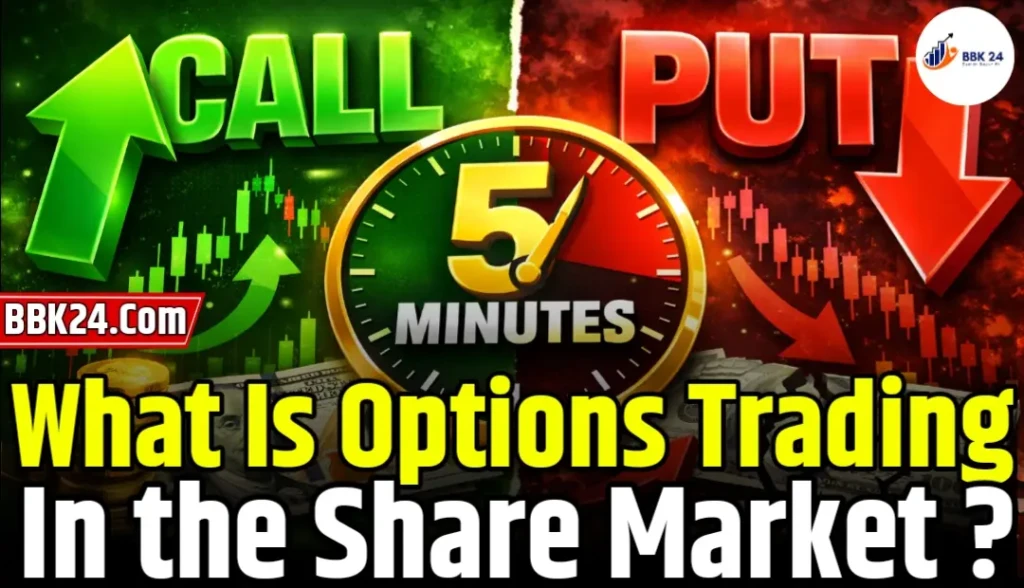
Call = You expect the price to go up.
Put Option – When You Think the Market Will Fall
Now suppose the stock is again at ₹100.
This time you think it will fall.
You buy a Put option. This gives you the right to sell the stock at ₹100 within a certain time.
If the stock drops to ₹80, your Put becomes valuable because you still have the right to sell at ₹100.
If the stock doesn’t fall, you just let the option expire and lose only the premium you paid.
Put = You expect the price to go down.
What Is Premium?
Premium is simply the amount you pay to buy the option.
Think of it like an entry fee.
If the trade doesn’t work, that premium is your maximum loss (for buyers).
But here’s the part many beginners don’t understand — options lose value over time. Even if the price moves slowly in your direction, time can reduce your profit.
That’s why timing matters a lot in options trading.
.
There are mainly two types of people in options:
- Traders who want to make quick gains from short-term moves.
- Investors who want protection against market falls.
For example, if someone holds shares worth ₹5 lakh and fears a short-term correction, they may buy Put options as insurance.
But many people are attracted to options because of leverage. With smaller capital, you can control larger value. This increases profit potential — but also increases risk.
Is It Risky?
Yes, Very. Options can move fast. Prices change quickly. And if your view is wrong, your option can become worthless by expiry. Also, while buyers have limited loss, option sellers can face very large losses if they don’t manage risk properly.
This is not something to try without learning.
Simple Difference Between Call and Put
Call is for bullish view.
Put is for bearish view.
That’s the foundation.
Everything else in options — strike price, expiry, volatility — builds on this basic idea.
Final Thoughts
Options trading is powerful, but it is not simple.
It can help you earn in rising or falling markets. It can also wipe out capital if used carelessly.
If you are new, first understand how normal share investing works. Then slowly learn how options behave. Don’t jump in just because you heard someone made quick money.
In the market, quick money stories are common. Consistent money is rare.
Disclaimer
This article is only for educational purposes. Options trading involves high risk and may not be suitable for everyone. Please consult a financial advisor or do proper research before trading.